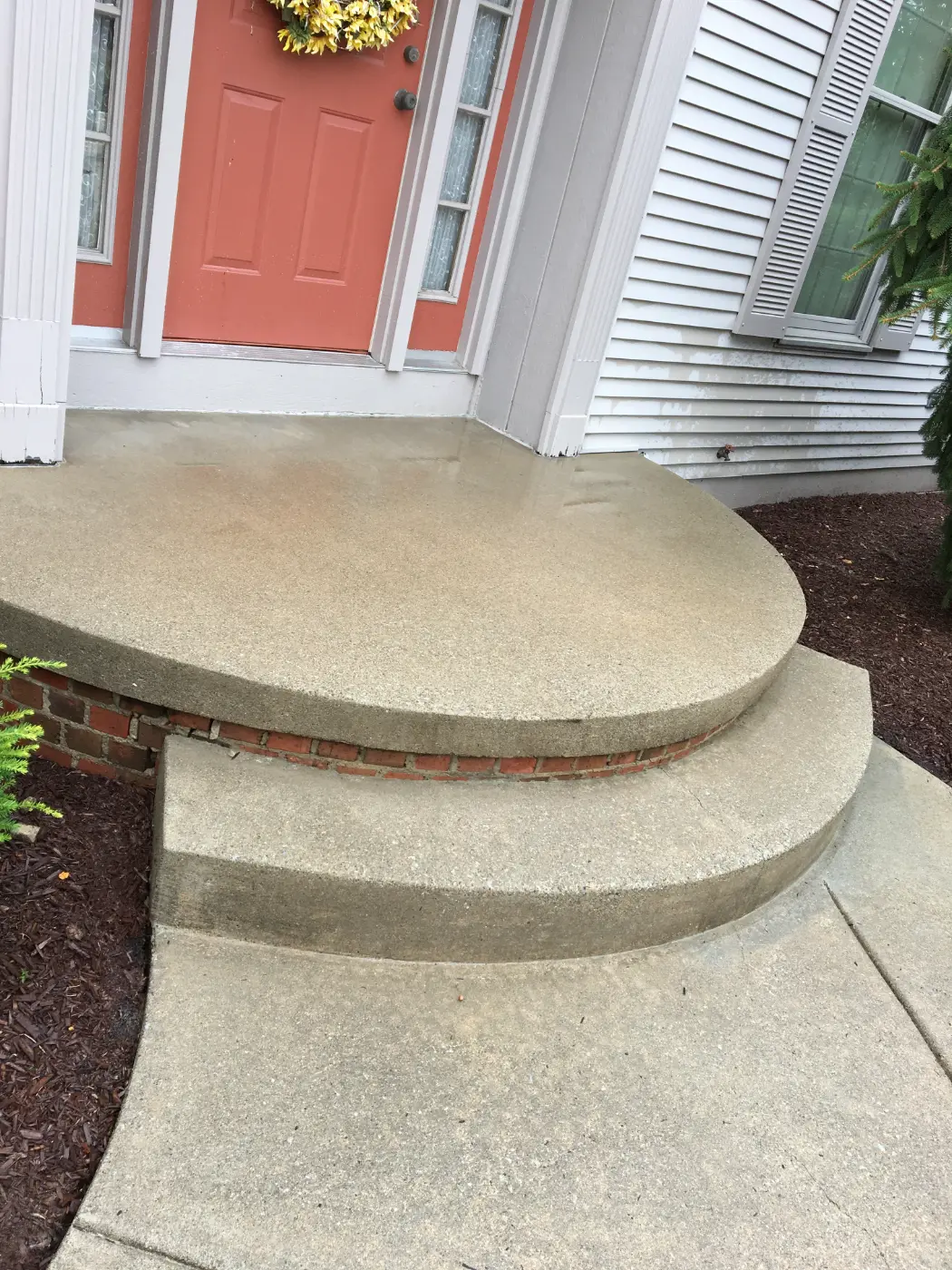
Ohio winters are hard on flatwork. Road salt soaks in, freeze and thaw pulls the surface apart, and the shaded edges grow the same algae that streaks your siding. By spring most driveways read two shades darker than the concrete actually is.
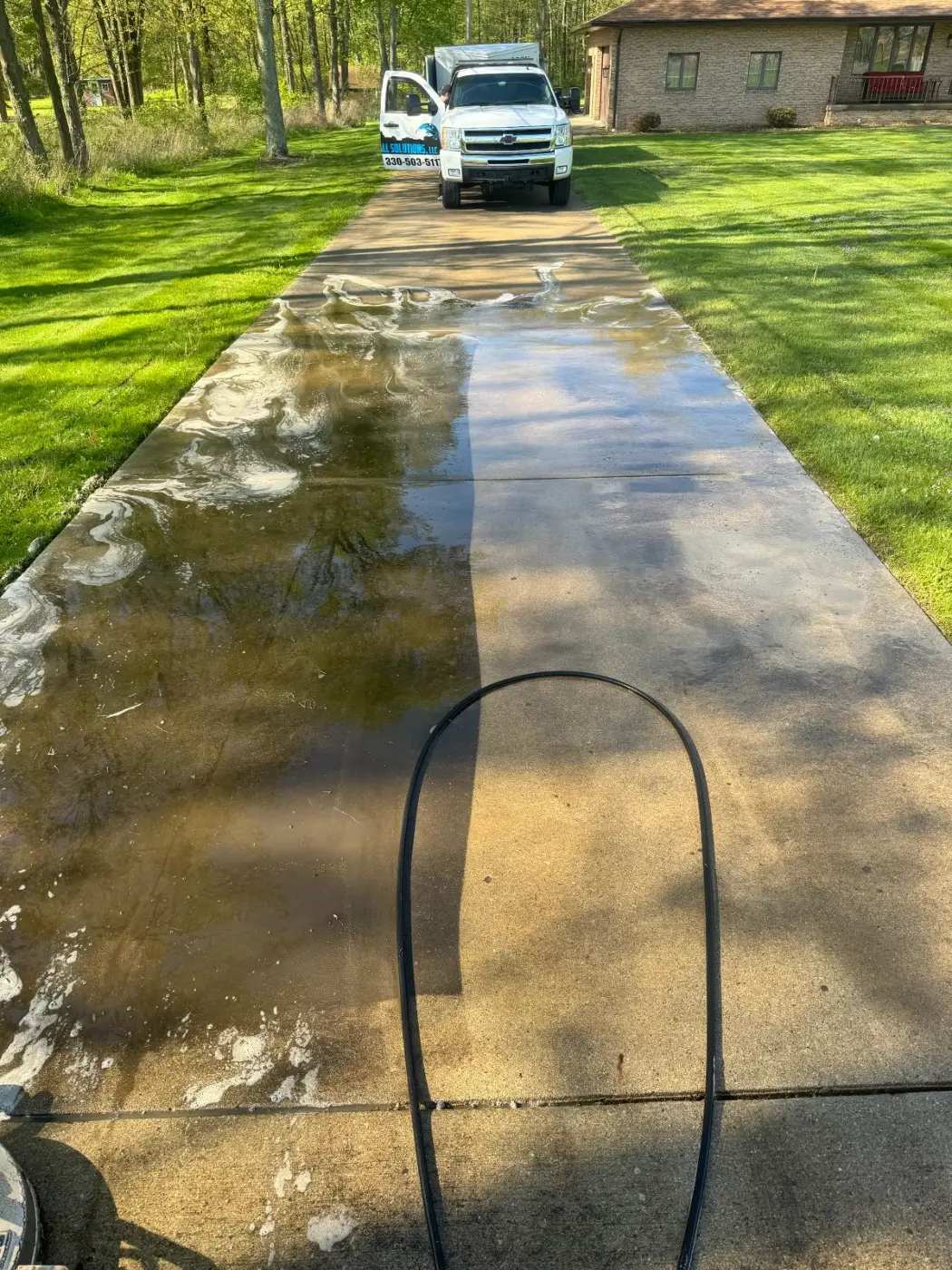
We clean with a rotating surface cleaner, which puts even pressure across the whole slab at once. That is the difference between concrete that looks uniformly restored and concrete covered in overlapping wand arcs. A mild degreaser goes down first on oil spotted areas near the garage, and stubborn organic staining gets a sodium hypochlorite treatment rather than more pressure.
Pavers, stamped concrete and exposed aggregate all get a lighter touch, since too much pressure strips joint sand and blows out the surface texture. Tell us what you have and we will tell you honestly what will come out and what will not. Rust, deep oil and tire scuff are the three that rarely leave completely.
Timing helps too. Concrete cleans best on a dry day with a few dry days behind it, because saturated slabs hold the staining deeper and rinse slower. If you are planning to seal, book the wash first and leave the slab a couple of days to dry completely before anything goes down on it.

Our process
- Rotating surface cleaner on driveways, sidewalks, patios, porches and pool decks.
- Mild degreaser on oil spotting; sodium hypochlorite on organic staining.
- Thorough rinse and air dry, with the mess kept off your siding and beds.
- No moving of furniture or equipment, and no responsibility for cracks that were already there.
- Water supplied on site.
What comes out and what does not
Organic staining, algae, mildew, general grime, salt film and most surface dirt come out completely. Light oil usually lifts with a degreaser and dwell time. Deep oil that has sat for years, rust from a fertilizer spreader, and paint overspray are all maybe rather than yes, and we will say so before we start.
Sealing is a separate conversation. A clean slab holds up better sealed, but it has to be bone dry first, which usually means coming back on another day.
Concrete and Driveway Cleaning questions
How often should a driveway be cleaned?
Every one to two years in this climate. Annual cleaning is worth it if you are in a shaded spot or if salt trucks run past your apron all winter.
Will pressure washing damage my concrete?
Not at the pressure and technique we use. Damage happens when a narrow tip is held too close, which etches lines into the surface. A surface cleaner spreads the work evenly and avoids that.
Can you clean pavers and stamped concrete?
Yes, at a lower pressure. Pavers may need joint sand topped up afterward, and stamped concrete often looks best when it is resealed once it dries.
Other services
Want a price on concrete and driveway cleaning?
Free quotes across Canfield, Boardman, Poland, Youngstown and the rest of the Valley. Josh answers the phone.